Case Gins
The
classic case gin shape became popular with manufacturer's during the later
1700's early 1800's. The image above is a nice example of an early 1800's
gin. The basic shape made this bottle well suited to shipping. And this
shape, usually held gin. Case gins were usually unembossed, but a great
many had the distillers name embossed on them and/or a seal applied. Seals
would often have just the initials of the distillers stamped or a trade
mark. Trade marks are quite varied and include such things as monograms
and animals. Gins embossed with animals, people and other items on the
sides can also be found. A nice example is a case gin with a key
embossed.
As the 1800's progressed, the sides of the gins began to straighten. The early gins had a
definite taper from top to bottom. Many
of the early flasks were black glass, but other colours can be
found.
Marble Bottle
The most ingenious and best known of all bottles for aerated waters was the one patented in 1875 by Hiram Codd, of Chamberwell, London. It contained a built-in stopper in the form of a common glass marble captive within the short neck, and held in place against a rubber washer by the pressure of gas from the contents. The marble was pressed down by means of a wood cap with a projecting dowel, and once it had been displaced the gas pressure was released and the bottle could be emptied.

Mallets
This area
also encompasses a long history of glass making, from the early free blown
bottles of the 16 and 1700's, to the very uniform molds of the late
1800's. Black glass is actually not black, but is usually either dark
amber or deep olive green. The color arises from the presence of
impurities in the glass. The producers of the contents of these bottles
didn't mind the dark color, as it hid a lot of the sediments that could be
found in the liquids produced.
Early in the manufacture of
the blacks were the wonderful bottles produced during the 1600's, 1700's,
and early 1800's. These bottles were free blown and blessed with an incredible
crudeness and individuality. The wines of the 1700's are great
examples of these pieces.
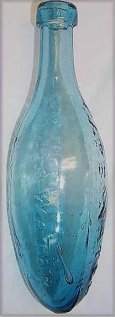
Torpedo
One of the rivals to the Hamilton was a bottle with straight, instead of convex, sides and a rounded base. Another, was egg-shaped but the base was flattened, which defeated the purpose of the original invention. It was, however, easier to fill and when the Crown cork, of metal with a cork lining, was introduced in 1892 a strong closure not required to be kept moist became available. The 'flat egg', as it is called came onto the market in about 1870 and went out of use some fifty years later.